Huddersfield Knee Rehabilitation Specialist Opens Up on Yorkshire Star
As a preeminent Physiotherapy clinic in the Yorkshire region, North Light Physiotherapy is once again involved in delivering its evidence-based care to one of Yorkshire Cricket’s leading lights.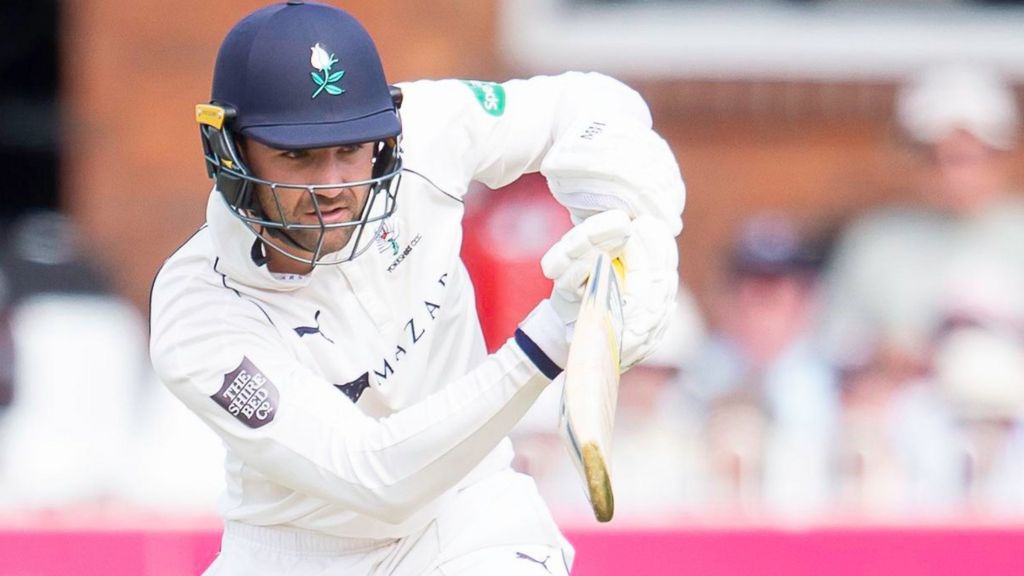
Will Fraine is under the care of Yorkshire CCC’s Physiotherapy Team, and the Huddersfield cricketer, Yorkshire’s most recent 1st Class centurion, has made a great start on his knee rehabilitation in Huddersfield, here at North Light Physiotherapy, as he continues on his road back to fitness.
Patellar Dislocation
Having sustained multiple dislocations of his Patella (knee cap) over a number of years, Will recently underwent a MPFL reconstruction, a procedure to mechanically stabilise the Patella, and reduce the likelihood of further episodes of dislocation.
Lead Physiotherapist Chris Liversidge explains:
Dislocation of the Patella, or even subluxation (“partial dislocation”) is an extremely debilitating injury, particularly in athletic people. Under normal circumstances, it is stabilised within a groove at the bottom end of the femur (thigh bone), and held in place securely by strong ligaments which surround the knee. Strong Quads (front thigh muscles) also increase the dynamic stability of the Patella within its groove.
In some individuals, the groove at the end of the thigh can be relatively shallow, (see below X-Ray image) making it easier for the patella to come out of place- often day to day activity is enough to cause this in people who are hyper-mobile. The medical literature also points to teenage girls being more at risk. Unfortunately, these things can’t be changed, but Quads strength can!
However in cases where the Patellofemoral joint (the joint between the kneecap and the groove in the femur) is very stable, excessive force, in the context of a sporting or other traumatic injury can be enough to overcome the strength of the supporting ligaments, and cause a dislocation. This most often occurs in the direction of the outer part of the knee/leg. 
This can be a very painful injury, and causes significant swelling, and subsequent reduction in Quads strength.
Initial Management
After pain and swelling settle down from the initial injury, Physiotherapy rehabilitation is critical to restore as much normality as possible. This involves lots of strength and balance work for the whole leg, and sometimes the trunk muscles! Depending on the future demands needing to be placed on the knee, Physiotherapy alone may be enough for the kneecap to behave normally in future. However if Physical demands are high, e.g. the knee is needed for sport, or heavy manual labour, the kneecap may be at risk of further subluxations or dislocations. The primary mechanical reason for this is that the supporting ligaments are over-stretched when injured- they contain elastic fibres, and once stretched beyond their elastic limit, they remain slack, making future dislocations more likely. Sometimes very strong Quads, and excellent balance and spatial awareness (proprioception) can compensate for the ligament deficiency, especially if demands on the knee aren’t very high. But in cases where demands are high, this is less likely. In these cases, where dislocations continue, help is needed from a specialist soft tissue knee surgeon.

MPFL Recon
Surgical Management
If the groove behind the patella isn’t on the shallow side, quite often reconstructing the MPFL, the major stabilising ligament of the kneecap, known as the Medial Patellofemoral Ligament (or MPFL), is required. This is achieved by fixing a borrowed piece of hamstring tendon into the side of the patella and the end of the femur, to effectively replace the deficient MPFL. (See picture: slight operative technique variations may mean if you have this procedure, it may not look exactly like this..) , after this, the knee is swollen, pain can be significant, and the Quads become extremely weak. To improve the Quads, the primary job is to reduce pain and swelling as quickly as possible. As these improve, we can become more progressive with the rehab demands we place on the knee. But we have to go slowly at first, so we don’t lose control of the pain and swelling! Electrical Muscle Stimulation (EMS) is a good way to initially fire up the Quads muscle, if it is inhibited. To return to a point where high-level demands can be placed on the knee, especially in the context of professional sport, can take 4-6 months.
Interestingly, the operation scars nowadays are relatively small, due to advances in surgical equipment and the skill of the surgeons using it! For this reason, the operation wounds can appear small, and give the impression that this “minimally invasive” type of procedure is a minor one…but we have an important job in explaining the extensive nature of these types of procedure to our patients, so they understand the significance of the extent of surgical treatment.
Returning to play
For Will, he is now well on the way to recovery. He is doing lots of static cycling, and quads, hamstrings and glutes work in the Gym, (see video links below), not to mention the all-important spatial awareness rehab, and some early cricket drills. He’s really enjoyed being able to bat against some tennis ball under arms, to encourage his front foot placement, and we have used a squat position to rehab his quads, whilst mimicking a slip catching position!
The aim is for him to be ready as soon after the start of the season as possible, assuming everything goes to plan. We’re all working hard to ensure his maiden 1st Class century, secured at Scarborough last season, is the first of many! 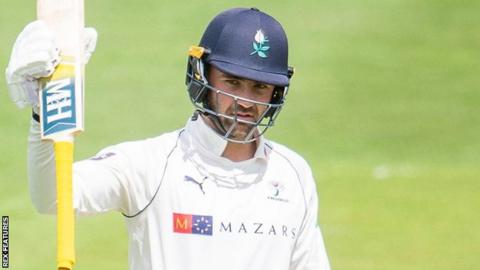
To book your Knee rehabilitation with Chris Liversidge, our Lead Physiotherapist, or one of the North Light Physiotherapy team, you can contact us here or call us on 01484 660663


 For our latest blog,
 Physiotherapy is highly effective for the diagnosis and treatment of dizziness, and for balance rehabilitation. In this piece we look at Vestibular Rehabilitation at North Light Physiotherapy, with
 Now don’t get me wrong- there were dark times-I did doubt myself- pain messes with your head in that way-, and I did come in for some criticism too (“you’re a Physio, you shouldn’t have problems like this-what hope is there for the rest of us?”). This was hard to take, but I had to reassure myself I could sort the problem. The thing is, I’m made of the same stuff as everyone else, so there’s no reason I shouldn’t develop back pain. The measure of me was, whether I was good enough to solve the problem? The answer was a resounding yes!

